SaaS customer onboarding is everything that happens between someone signing up and getting real value from your platform. Good onboarding gets new customers to their first useful result quickly. Poor onboarding is one of the main reasons people cancel in the first few weeks.
Define the first useful result
Decide what success looks like for a new customer. For a booking platform, it might be adding a service and taking a test booking. For a job management system, creating the first job and sending it to a staff member. Design onboarding around reaching that point.
Keep sign-up short
Ask only for what is needed to start. Extra details can be collected later, when they are relevant.
Guide the first steps
- A short checklist of setup steps.
- Sample data so the platform does not look empty.
- Tips shown at the right moment, not a long tour.
- Clear empty screens that explain what to do next.
Help business customers set up their team
Business platforms usually need several users. Make inviting colleagues and assigning roles simple, and explain what each role can see.
Follow up
- Welcome email with the first steps.
- Reminders if setup stalls.
- A check-in after the first week.
- Easy ways to get help.
Give your team visibility
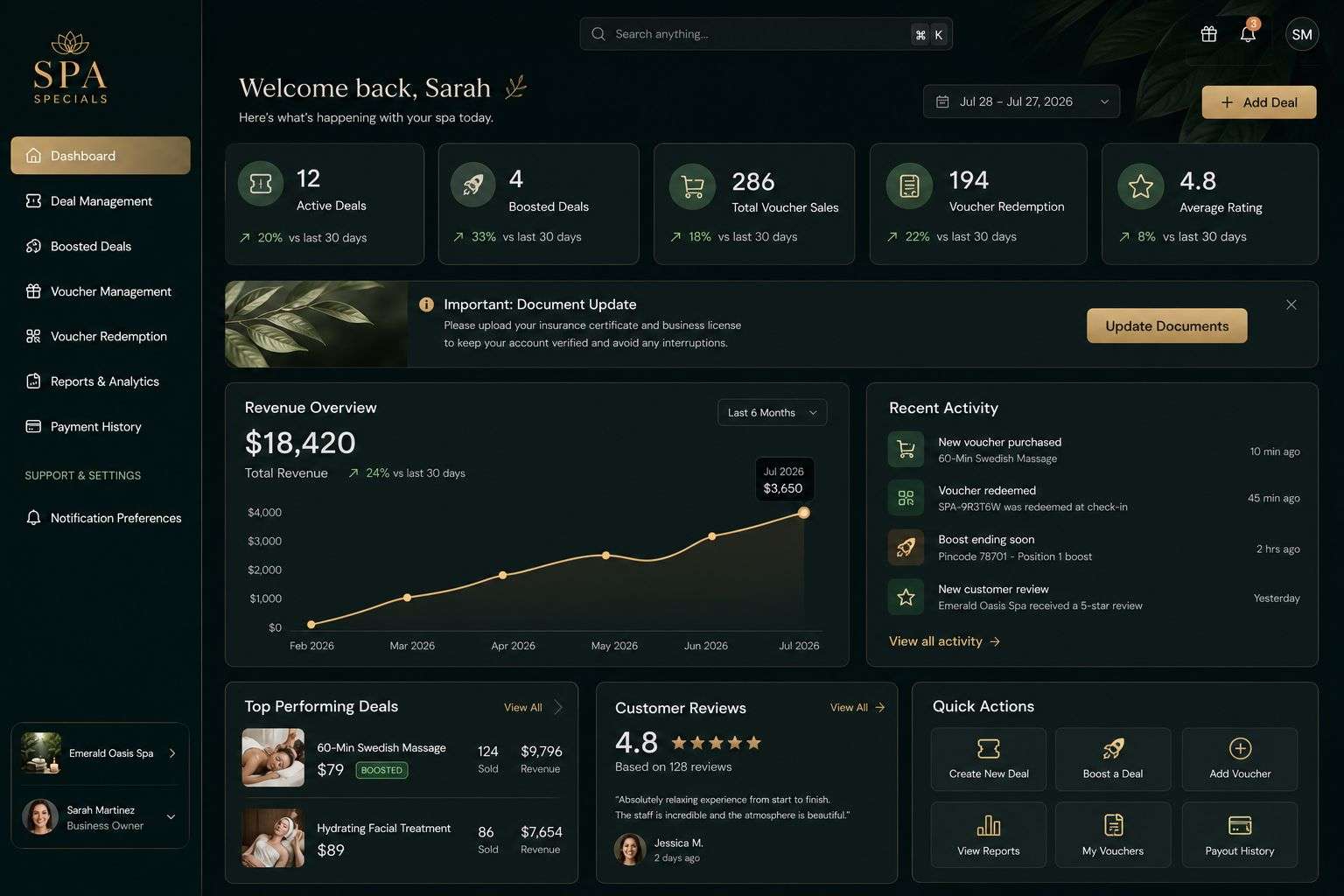
Your admin system should show which new customers are stuck, so your team can help before they give up. Strong admin tools are behind every platform we have built, including Spa Specials and ListnIN.
Measure it
Track how many sign-ups reach the first useful result, how long it takes and where people drop out. Improve the step with the biggest drop first.
Onboarding for internal systems
The same ideas apply when rolling out software to your own staff. Short, task-based training and quick early wins helped teams adopt systems like Force One, where site staff use an app for checks, timesheets and expenses.
Common onboarding mistakes
- Asking for too much information at sign-up.
- A long product tour nobody remembers.
- Empty screens with no guidance.
- No follow-up when a customer gets stuck.
- No measurement of where people drop out.
Fixing even one of these can noticeably reduce early cancellations. Start with the biggest drop-off point.
How we work
We start by talking through how your business works today, then agree the scope, cost and timing in a written proposal. Before development, we design the screens so you can see how the system will work and suggest changes. We build in phases, handing over working sections for you to test, and at completion you receive the software, source code and database, with a month of support.
Common questions
What about customers who never finish setup?
Your admin system can flag them so your team can offer help before they cancel.
Should onboarding differ by plan?
Often. Larger customers may need more setup help and a personal welcome call.
Should onboarding be automatic or personal?
Automated steps suit most customers. Personal help suits larger accounts or complex setup.
How long should onboarding take?
As short as possible. Aim for the first useful result in the first session.
Can onboarding be improved after launch?
Yes. Use data on where customers drop out to improve it regularly.
Next step
If you are building or improving a SaaS platform, book a free 15-minute software review.