
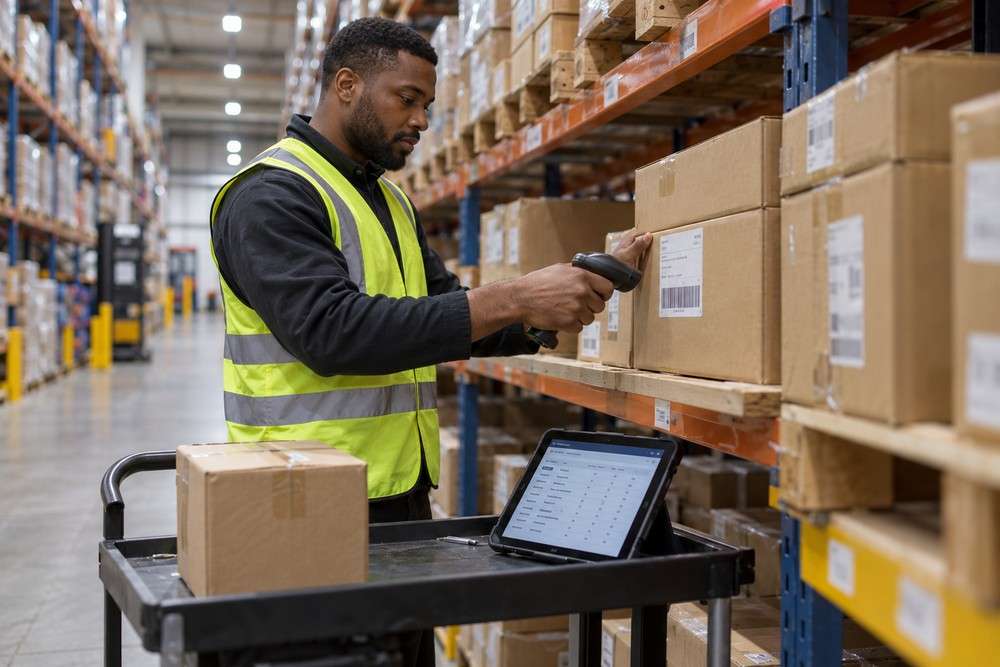
Stock accuracy starts at the point of movement
A manufacturer may know how much material was ordered but still struggle to see what is available on the workshop floor. Stock is received, moved between locations, issued to jobs and sometimes returned, often with updates recorded after the event.
Barcode scanning can reduce the need to retype product or location identifiers, but the scan itself is only part of the process. The software still needs to know what action is taking place and who is responsible for it.
Give items and locations reliable identifiers
A useful system needs a consistent reference for materials, finished products and storage locations. Similar products should not share ambiguous descriptions. Where batches or serial numbers matter, the record may also need to identify them.
Before printing labels, check what identifiers already exist in purchasing, stock or production software. Reusing a reliable code can be simpler than creating a second numbering scheme that staff must reconcile.
Record the meaning of each scan
Receiving goods, transferring stock, issuing materials and returning unused items are different transactions. The scanning screen should make that action clear. It may need to capture a quantity, job number, destination or reason for adjustment.
A quick example is a component received into stores and later issued to a production order. The system should show both movements and the remaining balance. If the same scan is submitted twice, safeguards should help staff identify and correct the duplicate.
Consider the working environment
Some manufacturing settings require rugged handheld devices, while others can use a phone or tablet with suitable scanning hardware. Labels can deteriorate in oily, dusty or outdoor environments. Readability, connectivity and safe operation need testing in the actual workplace.
Where devices work offline, the system also needs rules for synchronising transactions and resolving conflicts. Two employees should not assume the same stock is available simply because their devices have not yet exchanged updates.
Use traceability only where needed
A business may need to trace component batches through a production process for quality or customer requirements. Another may only require accurate quantities by location. The scope should match the risk and business need rather than collect information that nobody uses.
Reporting can help identify unexplained adjustments, recurring shortages or material movements that are not assigned to a job. Those reports remain useful only when the underlying scanning process is completed consistently.
Test a single material journey first
Choose a frequently used component and map its journey from delivery to production and any return. Trial receiving, transferring, issuing and correcting an error. Compare the resulting balance with a physical count before expanding the system.
Digital Solutions develops tailored inventory and workflow applications and can help assess how barcode scanning might connect with existing software.
Related reading
See our existing <a href=”https://www.digitalsolutions.help/manufacturing-software-solutions/”>manufacturing software solutions article</a> and learn about <a href=”https://www.digitalsolutions.help/custom-software-development-company/”>bespoke business software</a>.