If you are building a subscription platform, the features to plan first are the ones that control the customer’s whole journey: sign-up, plans and pricing, payments, access, upgrades, failed payments, cancellations and the admin tools your team needs to manage it all. Getting these right early saves expensive changes once paying customers are on board.
1. Sign-up and onboarding
How new customers register, verify their account and reach their first useful result. See SaaS customer onboarding.
2. Plans and pricing
- Monthly and annual billing.
- Free trials and what happens when they end.
- Tiers based on features, users or usage.
- Discounts and promotional codes.
3. Payments
Use a trusted payment provider for card payments and recurring billing. Plan invoices, receipts and VAT from the start.
4. Access control
Define exactly what each plan can access, and what happens to data and features when someone upgrades, downgrades or cancels.
5. The uncomfortable moments
- Failed payments: retries, reminders and when access is paused.
- Cancellations: when access ends and what happens to their data.
- Refunds and disputes.
6. Multiple users per customer
Business customers often need several users with different roles, all kept separate from other customers’ data.
7. Admin tools
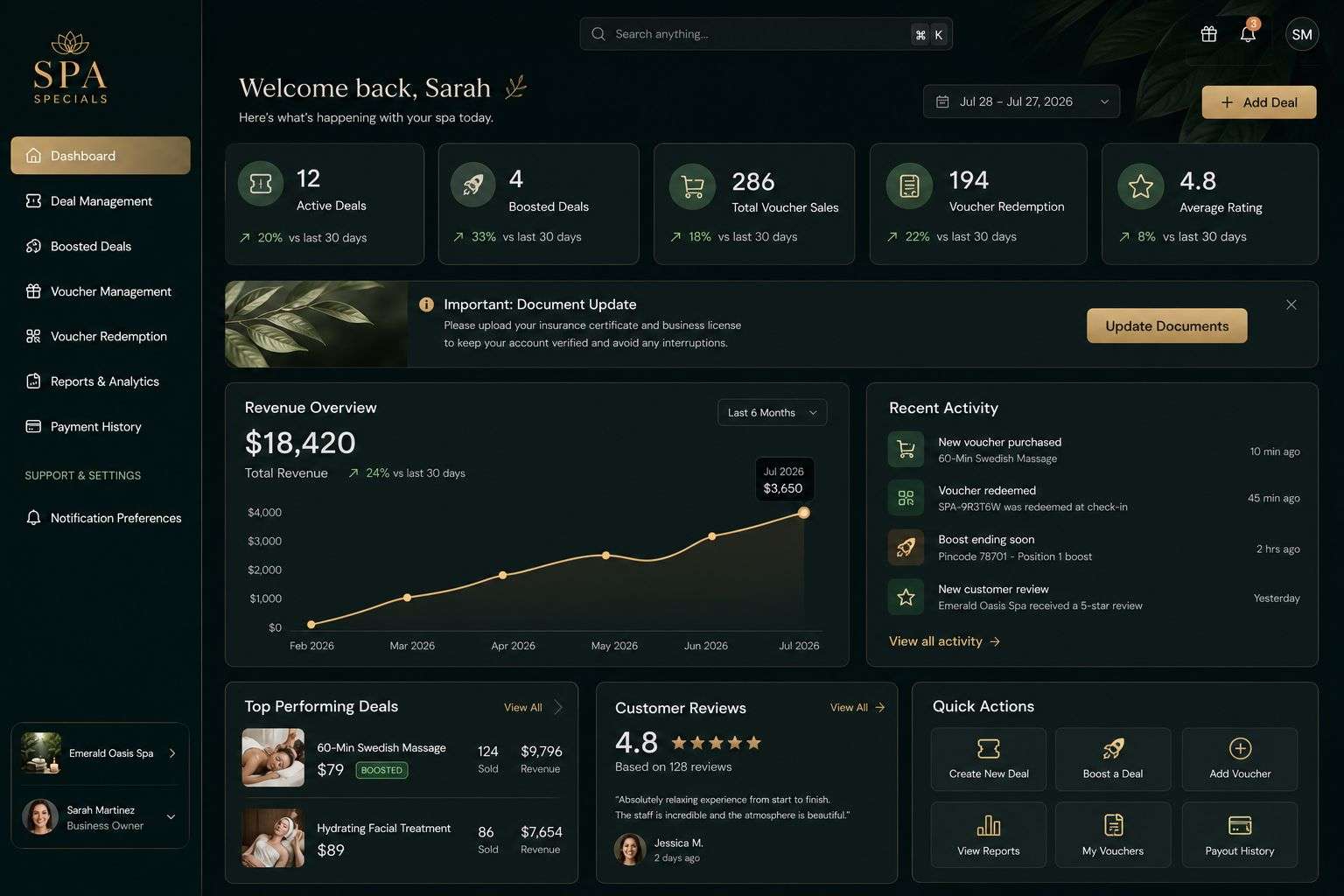
Your team needs to see customers, plans, payments and usage, help with support requests and manage content. Every successful platform we have built has a strong admin side, from the Spa Specials admin panel managing spas, listings and purchases, to the ListnIN admin system for profiles, events and broadcasts.
8. Reporting
Track sign-ups, active subscribers, cancellations and monthly revenue from day one.
Start with a focused first version
Launch with one plan, solid billing and the core feature customers pay for. Add tiers, integrations and extras as you learn what customers value.
From internal tool to SaaS
Some businesses build a system for themselves, then realise others need it too. See turning software into a subscription service.
Mistakes to avoid
- Building lots of features before billing works properly.
- No plan for failed payments.
- Mixing customers’ data together.
- No admin tools for support.
- Launching without tracking revenue and cancellations.
The platforms that last get the basics of billing, access and support right first, then add features based on what paying customers ask for.
How we work
We start by talking through how your business works today, then agree the scope, cost and timing in a written proposal. Before development, we design the screens so you can see how the system will work and suggest changes. We build in phases, handing over working sections for you to test, and at completion you receive the software, source code and database, with a month of support.
Common questions
Do we need a mobile app as well?
Not always. Many subscription platforms start as web apps, with a mobile app added when customers need it.
Can we change our pricing later?
Yes, if plans and access are designed flexibly from the start.
Should we offer a free trial?
Often, yes, if customers can see value quickly. Plan what happens when the trial ends.
How long does a SaaS platform take to build?
A focused first version can take a few months. See how long development takes.
Who owns the platform?
You do. When we complete a project, clients receive the software, source code, database code and everything involved in the build, and are free to use another developer for future work.
Next step
If you are planning a subscription platform, book a free 15-minute software review.