
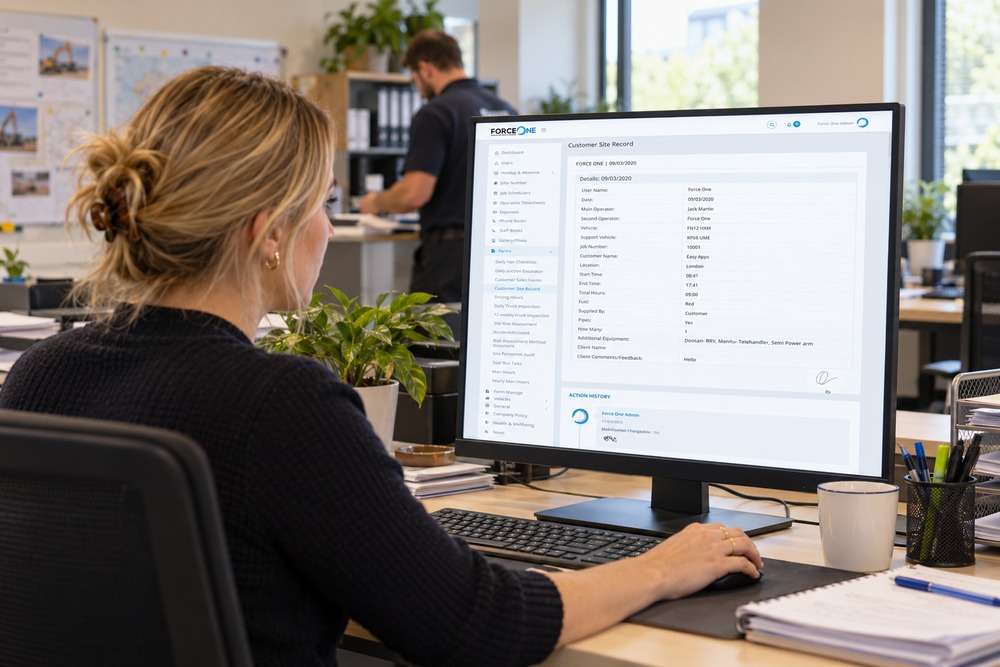
Chasing timesheets, checking receipts and copying information can feel like small interruptions. Across a team, those minutes can represent a substantial amount of working time. Our free calculator puts a value on that time using your own figures, so you have a starting point for a practical conversation.
Start with one process
Choose a task you can describe clearly, such as collecting and checking weekly timesheets. Enter the number of people involved, the hours each person spends on that task each week, and an average hourly employment cost. Use time spent doing the admin, rather than the whole working day.
The calculator starts with illustrative figures. Replace them with your own. Under “How the calculation works”, you can also change the working weeks per year. Its initial allowance of 46 weeks may not suit your business.
A worked example you can change
Suppose four people each spend 1.5 hours a week on a process and their average hourly employment cost is £22. At 46 working weeks, that represents 276 hours and £6,072 a year: an average of £506 a month. These are example inputs, not a claim about a client.
Move the reduction slider to explore a scenario. At 50%, this example would free up 138 hours with an estimated time value of £3,036 a year. The slider does not predict what software will achieve.
Freed time is different from money saved
Reducing a task does not automatically reduce wages or put the displayed amount back into the bank. Staff may instead use that time to answer customers, complete work or keep records up to date. Software build costs, hosting and ongoing support also need to be considered separately.
If several roles contribute, check that your figures count each person’s time once. An estimate becomes more useful when you observe the task over a representative week and include the checking and chasing that happen afterwards.
Bring the process, not a technical specification
At Digital Solutions, the starting point is what you want to happen and what takes the most time now. A first version might focus on a consistent form and a clear office approval screen. You do not need to decide every feature before discussing the problem.
Try the calculator, make a note of the assumptions you used and bring the result to a consultation. We can explore whether the workflow should change and what a useful first system would need to do.