
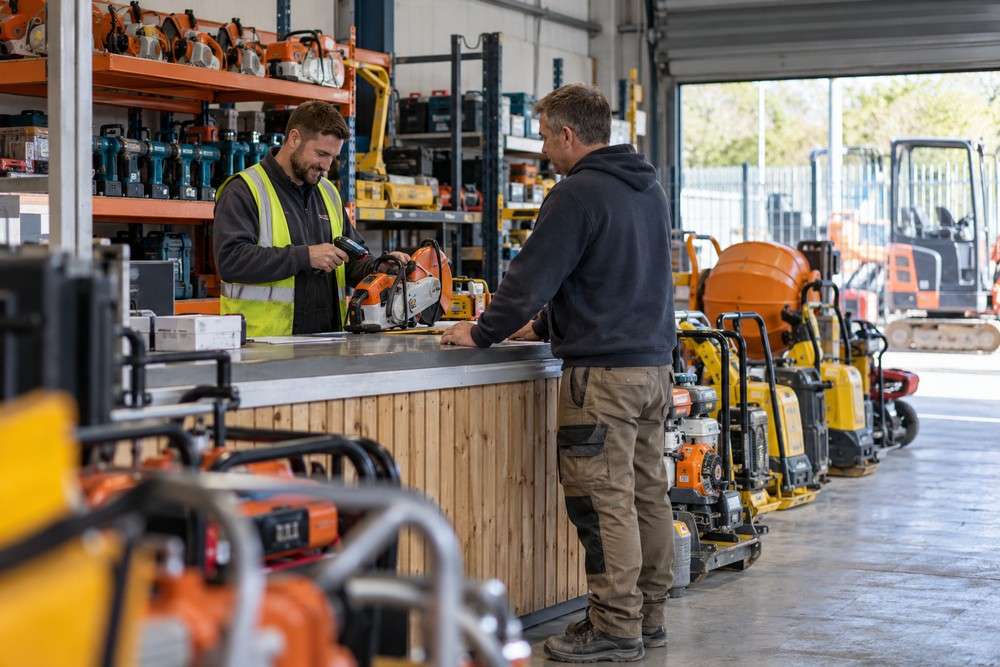
Asset and equipment tracking software keeps records of individual items and their movements. A bespoke system can help a business understand which asset is allocated, where it is expected to be and whether it is available for further work.

What could the system include?
The features below are suggestions for a bespoke project. The final functions and connections would be agreed around your business requirements.
- Individual asset identifiers
- Issue and return records
- Location and custodian history
- Fault and maintenance records
- Availability status
How could it work in practice?
A piece of equipment is issued to a team, moved to a job and later returned with a fault. Its history shows the transfers, while the availability record changes to reflect that it needs attention.
What are the benefits of a dedicated system?
The benefit is treating each asset as an identifiable item rather than only a stock quantity. Your own allocation, return and inspection stages can be reflected in the workflow, making responsibility clearer when equipment moves between people.
Questions and answers
Does equipment tracking mean live GPS tracking?
Not necessarily. A record-based system tracks declared locations and transfers. Live GPS requires compatible hardware, communications and a separate specification. Choose the method according to the accuracy and frequency of location updates you need.
Can QR codes be used to identify assets?
Yes, QR or barcode labels can open or identify an asset record. Plan durable labels, replacement procedures and a manual search option for cases where the code is damaged or inaccessible.
Would an existing software package be enough?
It may be. Compare your essential workflow with suitable existing products before commissioning a build. Use issuing and returning one asset as a practical test: can staff complete the whole journey, including exceptions, without copying information between unrelated tools? A dedicated system is worth considering where an important gap remains and the likely benefit justifies development and ongoing support.
Can we start with a smaller version?
Yes. A useful first scope is issuing and returning one asset. Agree the required screens, responsibilities and outputs for that journey before adding more modules. Test it with the people doing the work, including a correction or unsuccessful outcome, so the first release handles more than the ideal example.
Can our existing records and software be used?
That needs an initial review. For this project, check asset identifiers, locations and responsible users. Existing files may need cleaning and consistent identifiers before import. Connections depend on supported interfaces and account access. Agree which system owns each record, then check representative transfers and reconciled totals before relying on the new process.
What affects the cost and development time?
The estimate depends on the agreed workflow, number of user roles, reporting, integrations and any offline requirements. Bring examples of your current records and explain the exceptions staff handle. We can then separate essential work from later improvements. Hosting, third-party services, maintenance and support should be included in the overall budget rather than judged only by the initial build price.
What happens after the system goes live?
Agree who manages accounts, responds to faults and maintains the application and its connections. Staff need task-based training and a clear way to request help. Review the first weeks using real outcomes, such as how often information needs re-entering or a submission comes back for correction, before deciding which further features to add.
Plan your software with Digital Solutions
Tell us what you do today, where work gets delayed and which information staff enter more than once. Digital Solutions can help define a practical bespoke system around those requirements.
Explore our custom software development services or see examples of our previous projects.